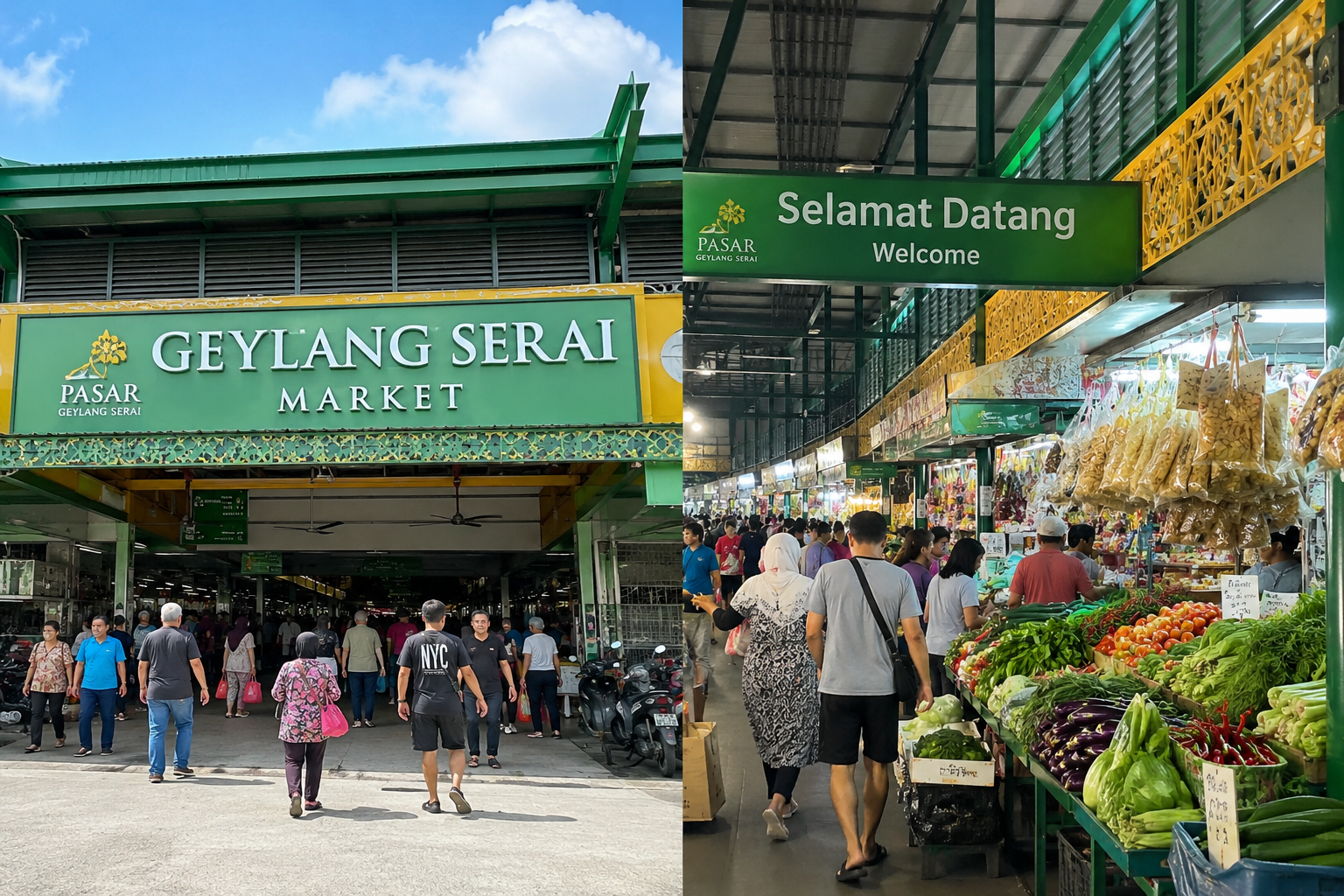
Have you ever walked into a place where the smell of freshly cooked food, traditional spices, and family memories all come together in one space? That is exactly the feeling many Singaporeans get when they visit Geylang Serai Market.
Located in one of Singapore’s most culturally rich neighbourhoods, this market is more than just a place to buy groceries or grab a meal. It is where generations of families have gathered for breakfast, where elders shop for traditional ingredients, and where visitors discover authentic Malay and Muslim cuisine.
In this guide, you’ll learn what makes Geylang Serai Market special, what food you should try, the best time to visit, how to get there, and the local tips that many first-time visitors miss.
The Story Behind Geylang Serai Market
Before it became one of Singapore’s most recognised food destinations, Geylang Serai was already an important centre for the Malay community.
The area has deep historical connections with Malay culture, traditional businesses, and community activities. Over the years, the market has evolved with Singapore itself — becoming cleaner, more organised, and more accessible while still keeping its traditional character.
What makes this place different from many modern food destinations is that it does not feel designed purely for tourists.
You will still see:
- Elderly residents buying fresh vegetables and spices
- Families sharing breakfast together
- Stall owners preparing recipes passed down through generations
- Regular customers greeting hawkers by name
That everyday atmosphere is what gives the market its charm.
Many food places in Singapore are famous because of one particular dish. Geylang Serai Market stands out because of the entire experience.
Why Geylang Serai Market Is Special Among Singapore Hawker Centres
Singapore has many famous hawker centres, but each has its own personality.
For example, some places are known mainly for Chinese cuisine, while others are famous for seafood or modern hawker creations.
Geylang Serai Market has a strong identity connected to Malay and Muslim food traditions.
Here, you can find dishes influenced by:
- Malay cooking techniques
- Indonesian flavours
- Indian-Muslim cuisine
- Traditional festive recipes
The market represents something bigger than food. It shows how Singapore’s different cultures continue to exist side by side.
For locals, visiting is often connected to memories — weekend breakfasts, Ramadan preparations, family shopping trips, and childhood treats.
Best Foods to Try at Geylang Serai Market
Walking into the food centre can feel slightly overwhelming because there are so many choices.
The easiest way to enjoy your visit is to start with dishes that represent the area’s food culture.
Nasi Padang: A Must-Try Local Favourite
If you visit Geylang Serai Market and only try one main meal, nasi padang is a strong choice.
This dish comes with steamed rice served alongside different dishes such as:
- Beef rendang
- Fried chicken
- Sambal vegetables
- Curry
- Fish dishes
The best part is choosing your own combination.
Every stall has its own style. Some focus on richer coconut-based gravies, while others highlight spicy sambal flavours.
A good nasi padang meal is not just about filling your stomach — it is about balancing flavours.
You get sweetness, spice, richness, and texture in one plate.
Mee Rebus and Mee Siam for a Traditional Breakfast
Many locals enjoy visiting Geylang Serai Market in the morning because traditional breakfast options are easier to find.
Mee rebus is a comforting noodle dish covered with thick, slightly sweet gravy. It usually comes with:
- Potato-based gravy
- Egg
- Lime
- Chilli
- Tofu
Mee siam offers a different experience with its tangy and spicy flavours.
These dishes represent the kind of everyday food that Singaporeans have enjoyed for decades.
Traditional Malay Snacks and Kueh
One of the most enjoyable parts of visiting the market is exploring the colourful selection of traditional snacks.
Look out for:
- Kueh lapis
- Onde-onde
- Seri muka
- Curry puffs
- Traditional cakes
These small treats are especially popular during festive seasons, but many stalls sell them throughout the year.
They are perfect if you want something sweet after your meal or a small gift to bring home.
Visiting Geylang Serai Market During Ramadan
Every year, the area becomes especially lively during Ramadan.
The famous Geylang Serai Ramadan Bazaar attracts huge crowds looking for festive food, shopping, and evening activities.
However, there is often confusion between the bazaar and the permanent market.
The difference is simple:
- Geylang Serai Market operates throughout the year.
- The Ramadan Bazaar is a seasonal event held during the fasting month.
During Ramadan, the atmosphere changes completely.
You will see:
- Large crowds after sunset
- Special festive dishes
- Traditional clothing stalls
- Family groups shopping together
- New food trends appearing every year
It is exciting, but it can also be crowded.
If you prefer a quieter experience, visit the market outside Ramadan.
Best Time to Visit Geylang Serai Market
Timing can completely change your experience.
Morning: Best for Wet Market Shopping
If you want to experience the traditional side of the market, morning is ideal.
You will find:
- Fresh produce
- Seafood
- Meat vendors
- Traditional ingredients
The atmosphere feels more local and less rushed.
Lunch: Best for Hawker Food
Around lunchtime, the food centre becomes busier.
This is when office workers, residents, and regular customers arrive.
It is a great time if your goal is trying different dishes.
Evening: Best for Atmosphere
Evenings bring a different energy.
Families gather, food stalls become lively, and the neighbourhood feels more social.
However, popular stalls may have longer queues.
How to Get to Geylang Serai Market
Getting there is easy because the area is well connected by public transport.
The nearest MRT stations are:
- Paya Lebar MRT Station
- Eunos MRT Station
From either station, it is a short walk or bus ride.
For first-time visitors, using MRT is usually the simplest option because parking nearby can become challenging during busy periods.
Local Tips Before You Visit
A few small tips can make your experience much better.
Bring Cash
Although Singapore is becoming increasingly cashless, some traditional stalls may still prefer cash payments.
Having some small notes makes ordering easier.
Visit Hungry
The best way to enjoy Geylang Serai Market is to try multiple dishes.
Instead of ordering one huge meal, consider sharing several items with friends or family.
Expect Crowds During Festivals
During Ramadan and festive periods, the area becomes extremely popular.
Go earlier if you want more choices and fewer crowds.
Respect the Market Environment
Remember that this is not only a tourist attraction.
Many people visit for daily meals and groceries, so treat it like a neighbourhood space.
Hidden Experiences Many Visitors Miss
Most guides talk about food, but the real charm of Geylang Serai Market comes from the small moments.
For example:
Watching a hawker prepare food using traditional methods can tell you more about Singapore’s food heritage than any signboard.
Seeing families shop together shows how markets remain part of everyday life.
Even conversations between stall owners and regular customers reveal a sense of community that is becoming harder to find in modern shopping malls.
This is why many locals continue returning even when there are countless new food options around Singapore.
Is Geylang Serai Market Worth Visiting?
The answer depends on what you are looking for.
If you want a polished tourist attraction with luxury surroundings, this may not be the place.
But if you want:
- Authentic Singapore food
- Cultural experiences
- Affordable meals
- Traditional flavours
- A glimpse into everyday local life
then Geylang Serai Market is absolutely worth visiting.
It offers something many modern places cannot recreate — a genuine connection between food and community.
Frequently Asked Questions About Geylang Serai Market
1. What is Geylang Serai Market famous for?
Geylang Serai Market is famous for its Malay and Muslim food offerings, including nasi padang, mee rebus, mee siam, traditional kueh, and festive foods. It is also known as an important cultural gathering place for Singapore’s Malay community.
2. Is Geylang Serai Market open every day?
Yes, Geylang Serai Market generally operates throughout the week, although individual stalls may have different opening hours. Morning visits are usually best for experiencing the wet market section.
3. What food should I try at Geylang Serai Market?
First-time visitors should try nasi padang, mee rebus, mee siam, traditional Malay snacks, and local desserts. Sharing several dishes is a good way to explore more flavours.
4. Is Geylang Serai Market the same as the Ramadan Bazaar?
No. The market operates all year, while the Geylang Serai Ramadan Bazaar is a seasonal event held during Ramadan. Both offer food experiences, but the atmosphere and scale are different.
5. How do I get to Geylang Serai Market?
The easiest way is by MRT. Paya Lebar MRT and Eunos MRT are nearby stations, followed by a short walk or bus ride to the market.
Conclusion
Geylang Serai Market is one of those places that shows why Singapore’s food culture is so special.
It is not only about finding a delicious meal. It is about experiencing a neighbourhood where traditions, families, and flavours continue to live together.
From a plate of nasi padang to a simple traditional snack, every corner tells a story. The market connects Singapore’s past with its present while still remaining part of everyday life.
Whether you are a local looking for a nostalgic food trip or someone discovering this area for the first time, Geylang Serai Market offers an experience that feels genuine.
The best way to appreciate it is simple: visit with an open mind, try something new, and take your time exploring.