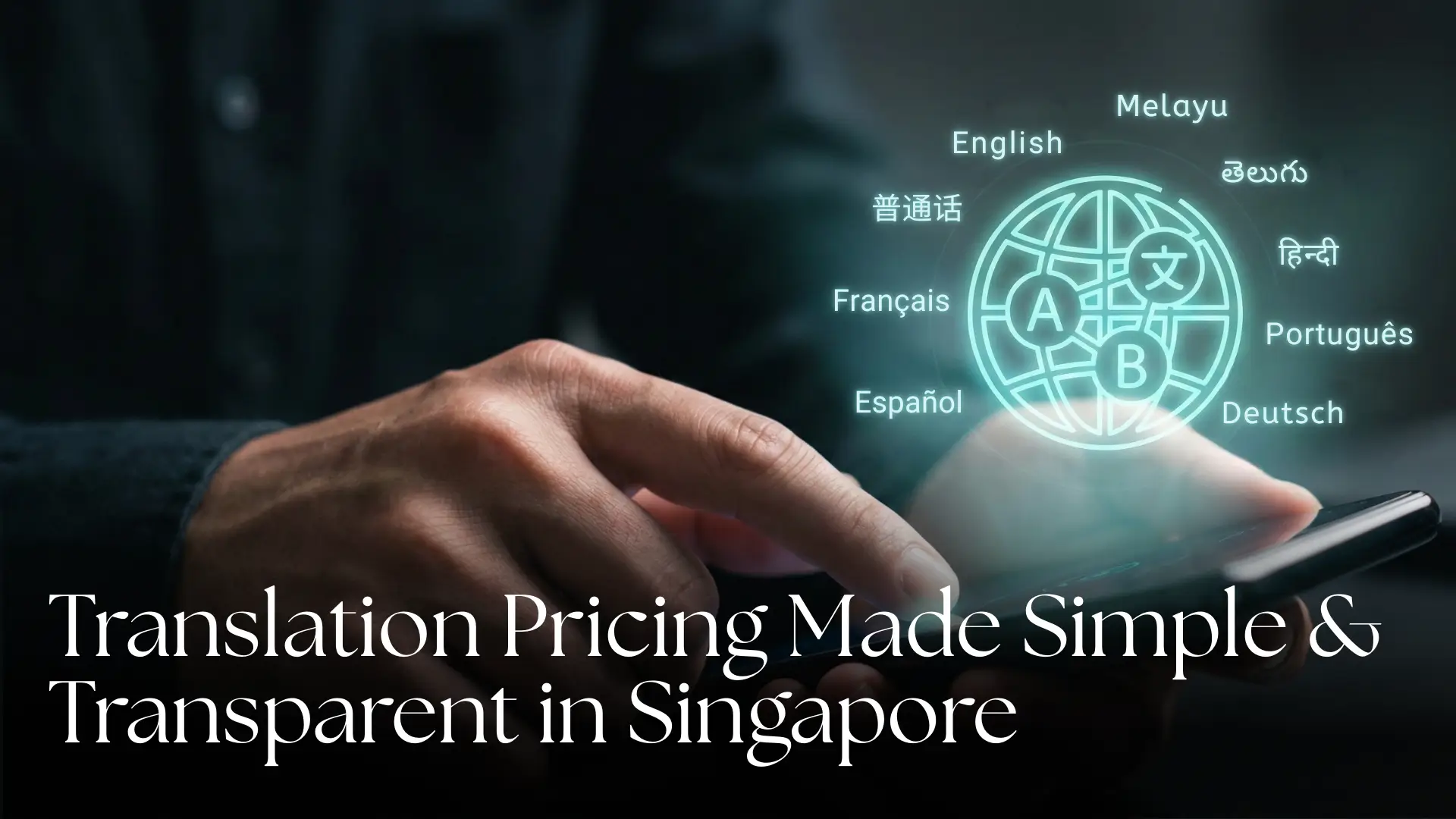
Translation services singapore stands among the world’s most multilingual business hubs. Companies, government agencies, startups, universities, and international brands operate across English, Mandarin, Malay, Tamil, Japanese, Korean, Arabic, Bahasa Indonesia, and many other languages every day. Because of this, professional translation services in Singapore have become an essential part of business growth, compliance, and international communication.
A poor translation can damage trust, delay immigration approvals, weaken marketing campaigns, or create legal misunderstandings. On the other hand, accurate translation helps businesses expand into ASEAN markets, connect with customers, and maintain professional credibility.
The translation industry in Singapore has grown rapidly due to increasing cross-border trade, financial services, eCommerce, healthcare expansion, and international education demand. Market research shows Singapore operates as a major language services hub in Asia, with strong demand for certified document translation, localization, interpretation, subtitling, and multilingual content adaptation.

This guide explains how translation services work in Singapore, what businesses should look for, pricing expectations, industry standards, and how to choose the right language partner for long-term success.
Why Translation Services Matter in Singapore
Singapore’s economy depends heavily on international communication. The country attracts multinational corporations, foreign investors, tourists, skilled workers, and global students. Since Singapore uses four official languages — English, Mandarin, Malay, and Tamil — translation is deeply integrated into daily business and government operations.
Businesses entering Singapore often need multilingual support for:
- Contracts and legal paperwork
- Immigration documents
- Product packaging
- Marketing campaigns
- Technical manuals
- Websites and mobile apps
- Financial reports
- Medical records
- Training materials
- Customer support documentation
Professional translation goes far beyond replacing words from one language with another. A skilled translator understands cultural nuance, legal terminology, audience expectations, and local communication styles.
For example, financial institutions in Singapore require precise multilingual communication because even minor wording mistakes can create compliance risks. Healthcare providers also depend on accurate medical translations to avoid patient misunderstandings and documentation errors.

Businesses operating across Southeast Asia often use Singapore as their regional headquarters. This creates growing demand for localization services tailored for Indonesia, Malaysia, Thailand, Vietnam, and the Philippines.
Types of Translation Services Available in Singapore
Translation providers in Singapore usually specialize in different industries and document categories. Choosing the correct service matters because each field requires subject expertise.
Certified Translation Services
Certified translation is commonly required for:
- Immigration applications
- Birth certificates
- Marriage certificates
- Academic transcripts
- Visa submissions
- Court documents
- Government paperwork
Authorities often require translations completed by professional translators with official certification or notarization.
Certified translations typically include:
- Translator declaration
- Company stamp
- Accuracy confirmation
- Official formatting
These translations are commonly used for ICA submissions, employment applications, educational admissions, and overseas documentation processes. Singapore has strong demand for certified translations due to international mobility and global business migration.
Business Translation Services
Corporate translation focuses on commercial communication and brand consistency. Businesses require multilingual content for both internal and external communication.
Common examples include:
- Company profiles
- Annual reports
- Investor presentations
- HR policies
- Sales materials
- Training documents
- Business proposals
A business translator must preserve tone, professionalism, and industry terminology. Financial translation, for instance, requires deep familiarity with accounting standards and banking vocabulary.
Legal Translation Services
Legal translation requires exceptional accuracy because legal systems depend heavily on exact wording.
Legal translators commonly work with:
- Contracts
- Affidavits
- Court documents
- Arbitration files
- Compliance reports
- Intellectual property documents
Mistakes in legal translation can create serious financial and regulatory consequences. This is why businesses often choose translators with legal backgrounds or industry-specific expertise.
Medical Translation Services
Medical translation requires subject knowledge, confidentiality, and precise terminology.
Healthcare organizations often translate:
- Patient records
- Clinical reports
- Pharmaceutical documents
- Medical research
- Insurance claims
- Healthcare websites
Singapore’s medical tourism sector has increased demand for multilingual healthcare communication across Asia.
Website Localization Services
Localization adapts digital content for specific regions and cultures rather than translating text word-for-word.
Localization often includes:
- Website translation
- SEO adaptation
- Currency conversion
- Cultural messaging
- UX optimization
- App localization
Businesses expanding into Southeast Asia increasingly invest in multilingual SEO and localized digital experiences to improve customer trust and conversion rates.
Human Translation vs AI Translation
Artificial intelligence tools have changed the translation industry significantly. Many businesses now use machine translation for speed and cost reduction. However, experienced companies still rely heavily on professional human translators for accuracy and brand protection.
Recent industry discussions show that businesses often return to human-led translation after discovering limitations in AI-only workflows. Common problems include:
- Cultural misunderstandings
- Incorrect terminology
- Tone inconsistency
- Legal inaccuracies
- Brand messaging errors
Hybrid translation models are becoming more common in Singapore. These workflows combine AI-assisted translation with human editing and quality review.
Comparison Table: Human vs AI Translation
| Feature | Human Translation | AI Translation |
|---|---|---|
| Cultural understanding | Excellent | Limited |
| Legal accuracy | High | Moderate |
| Speed | Moderate | Fast |
| Brand tone adaptation | Strong | Weak |
| Technical terminology | Reliable | Inconsistent |
| Cost | Higher | Lower |
| SEO localization | Better | Basic |
| Creative content | Excellent | Poor |
| Context awareness | Strong | Limited |
Businesses handling legal, financial, medical, or customer-facing content generally benefit more from professional human translators.
Industries That Depend on Translation Services in Singapore
Financial Services
Singapore operates as one of Asia’s largest financial centers. Banks, fintech companies, insurance firms, and investment organizations require multilingual communication for clients and regulators.
Financial translation commonly includes:
- Investment reports
- Banking documentation
- Regulatory filings
- Compliance materials
- Wealth management content
The financial sector represents one of Singapore’s largest translation markets.
eCommerce and Retail
Online businesses expanding across ASEAN countries require localized product pages, ads, checkout experiences, and customer support.
Strong localization improves:
- Customer trust
- Conversion rates
- Search visibility
- Regional engagement
Technology and SaaS
Software companies entering Asian markets often localize:
- Mobile apps
- Dashboards
- User guides
- Product documentation
- Help centers
Singapore’s growing startup ecosystem has increased demand for multilingual SaaS localization.
Education
Universities and educational institutions frequently translate:
- Admission materials
- Academic certificates
- Course content
- Research papers
Singapore’s international education market creates ongoing demand for certified academic translation services.
Healthcare
Medical tourism and international healthcare services have expanded translation demand within:
- Hospitals
- Clinics
- Pharmaceutical firms
- Medical research organizations
Healthcare translation requires confidentiality and medical expertise.
How to Choose the Right Translation Service in Singapore
Many businesses focus only on pricing, but quality and specialization matter far more over the long term.
Check Industry Expertise
A translator specializing in legal contracts may not be suitable for medical content or SEO localization.
Ask about:
- Industry experience
- Subject specialization
- Native-language translators
- Certification standards
Evaluate Quality Assurance
Reliable agencies use structured review processes including:
- Translation
- Editing
- Proofreading
- QA review
ISO-certified providers often follow stricter quality procedures.
Review Turnaround Time
Fast delivery matters, but rushed translation can reduce quality.
Businesses should balance:
- Urgency
- Complexity
- Volume
- Accuracy requirements
Ask About Confidentiality
Translation projects often include sensitive data.
Professional providers usually offer:
- Non-disclosure agreements
- Secure file transfer
- Data privacy compliance
- Confidential workflows

Understand Localization Capability
Localization expertise matters for:
- Marketing campaigns
- Website SEO
- Regional adaptation
- Cultural relevance
This becomes especially important for ASEAN market expansion.
Average Translation Costs in Singapore
Pricing varies depending on:
- Language pair
- Technical complexity
- Certification requirements
- Urgency
- File format
- Industry specialization
Typical pricing structures include:
- Per word
- Per page
- Hourly rates
- Project-based pricing
Research across Singapore’s translation market shows:
- Certified personal documents often range from SGD 25 to SGD 70 per page
- Business translation rates may range from SGD 0.10 to SGD 0.35 per word depending on specialization and quality standards
Highly technical industries such as legal, medical, and financial translation usually cost more due to expertise requirements.
Important Languages Commonly Requested in Singapore
Singapore’s translation market supports more than 100 languages, but some language pairs are requested more frequently.
Most Common Translation Requests
- English to Chinese
- Chinese to English
- English to Malay
- English to Tamil
- Japanese to English
- Korean to English
- Bahasa Indonesia to English
- Thai translation
- Vietnamese translation
- Arabic translation
Businesses expanding into Southeast Asia often require multilingual localization strategies covering several ASEAN languages simultaneously.
Translation Quality Standards Businesses Should Know
Professional translation quality depends on more than language fluency.
Strong translation providers typically follow:
- Terminology management
- Translation memory systems
- Native-language review
- Multi-step editing
- Subject expertise
- Style guide consistency
ISO Standards
Many professional agencies follow standards such as:
- ISO 17100 for translation services
- Data security protocols
- Linguistic quality review systems
These standards help maintain consistency and reliability across multilingual projects.
Common Mistakes Businesses Make When Hiring Translation Services
Choosing Based Only on Price
Cheap translation often leads to:
- Poor grammar
- Cultural mistakes
- Brand damage
- Legal risks
Using Generic Machine Translation
Free translation tools may work for casual communication but often fail with:
- Contracts
- Marketing campaigns
- Technical manuals
- Medical documentation
Ignoring Localization
Direct translation without localization can make content sound unnatural or culturally inappropriate.
Skipping Proofreading
Even experienced translators require editing and quality review processes.
SEO Localization and Multilingual Marketing
One major area businesses often overlook is multilingual SEO.
Website translation alone does not guarantee search visibility in international markets.
Professional SEO localization includes:
- Local keyword research
- Regional search behavior
- Cultural search intent
- Native-language metadata
- Localized landing pages
For example, customers in Singapore may search differently from audiences in Malaysia or Indonesia even when using similar languages.
Businesses targeting ASEAN growth often benefit from:
- Country-specific content
- Multilingual blog strategies
- Localized product descriptions
- Native-language PPC campaigns
This approach improves both rankings and user trust.
The Growing Demand for Interpretation Services
Interpretation differs from translation because it focuses on spoken communication rather than written content.
Singapore businesses increasingly use:
- Simultaneous interpretation
- Consecutive interpretation
- Conference interpretation
- Remote interpretation
Interpretation services are widely used for:
- International meetings
- Government conferences
- Medical consultations
- Legal proceedings
- Corporate training
Remote interpretation has grown rapidly due to hybrid work and international business operations.
Future Trends in Singapore’s Translation Industry
The translation industry continues evolving with technology and globalization.
AI-Assisted Human Translation
Many providers now combine:
- Neural machine translation
- Human editing
- Translation memory tools
- AI quality review
ASEAN Localization Growth
Singapore remains a regional gateway for companies expanding into Southeast Asia.
Demand continues rising for:
- Bahasa Indonesia localization
- Thai content adaptation
- Vietnamese SEO translation
- Regional customer support
Video and Multimedia Translation
Businesses increasingly localize:
- Video subtitles
- E-learning content
- Podcasts
- Social media videos
Data Privacy and Compliance
As translation projects involve confidential business information, companies increasingly prioritize:
- Secure workflows
- Confidentiality agreements
- Data protection compliance
How Professional Translation Impacts Brand Reputation
Customers notice poor translation immediately. Awkward phrasing, grammar mistakes, or incorrect terminology can damage credibility.
Professional translation helps businesses:
- Build trust
- Improve customer experience
- Increase international sales
- Maintain brand consistency
- Reduce legal risks
In competitive industries, language quality directly affects conversion rates and customer confidence.
Strong multilingual communication also improves:
- Employee onboarding
- International partnerships
- Investor relations
- Cross-border collaboration
FAQ Section
What is the difference between translation and localization?
Translation converts text from one language to another. Localization adapts content for cultural relevance, search behavior, local expressions, and regional expectations.
Are certified translations required in Singapore?
Yes. Certified translations are commonly required for immigration applications, legal paperwork, academic submissions, and government documentation.
How long do translation services take?
Turnaround time depends on complexity, language pair, formatting, and word count. Simple certified documents may take one to two days, while large corporate projects may require several weeks.
Can AI replace professional translators?
AI can assist with speed and productivity, but human translators remain essential for legal accuracy, cultural nuance, branding, and technical precision.
Which industries need translation services most in Singapore?
Financial services, healthcare, legal, education, technology, eCommerce, and government sectors depend heavily on professional translation.
How much do translation services cost in Singapore?
Costs vary by language pair and complexity. Certified documents may cost SGD 25–70 per page, while business translation often ranges from SGD 0.10–0.35 per word.
What languages are most requested in Singapore?
English, Mandarin Chinese, Malay, Tamil, Japanese, Korean, Bahasa Indonesia, Thai, and Vietnamese are among the most requested languages.