Choosing a primary school in Singapore can feel overwhelming. One conversation with another parent and suddenly you are hearing about balloting phases, alumni priority, GEP programs, and school reputations that seem larger than life.
But here’s the truth many parents eventually realize: the “best” school is not always the right school for every child.
Some children thrive in academically intense environments. Others grow faster in schools that focus on confidence, creativity, or holistic development. That’s why this guide is not just another generic list. It helps you understand what actually makes a primary school stand out in Singapore and how to choose wisely for your child’s future.
Why Singapore’s Primary Schools Are Highly Respected
Singapore’s education system consistently ranks among the strongest globally. Parents from around the world admire the country’s structured curriculum, bilingual policy, disciplined environment, and strong academic outcomes.
Primary schools in Singapore focus on more than exam scores. Many schools now place equal importance on:
- Character development
- Leadership skills
- Digital literacy
- Creativity and innovation
- Community involvement
- Sports and performing arts
The Ministry of Education (MOE) has also reduced excessive exam pressure over recent years, encouraging schools to create more balanced learning environments.
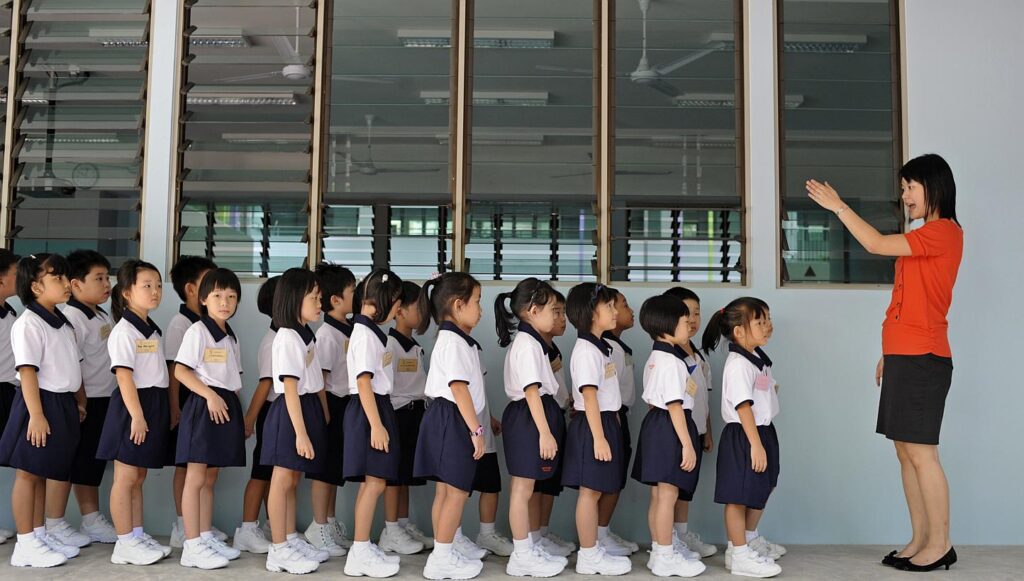
That shift has changed how many parents evaluate schools today.
What Makes a Primary School “Top Tier” in Singapore?
Before looking at school names, it helps to understand the factors parents commonly consider.
Academic Performance
Schools with consistently strong PSLE outcomes naturally attract attention. These schools often have structured teaching methods and rigorous learning cultures.
School Culture
A child spends six important years in primary school. The atmosphere matters just as much as grades.
Questions parents often ask include:
- Is the school nurturing?
- Are teachers approachable?
- Does the environment feel overly competitive?
- Will my child feel supported?
Co-Curricular Activities (CCAs)
Top schools often provide excellent programs in:
- Robotics
- Sports
- Music
- Debate
- Coding
- Art and design
Location and Accessibility
Distance plays a major role in admissions under Singapore’s school registration system. Living near a desired school can improve admission chances significantly.
Alumni Reputation
Some schools have long-standing histories and strong alumni networks that contribute to their prestige.
Quick Comparison Table of Top Primary Schools in Singapore
| School | Known For | Type | Location |
|---|---|---|---|
| Nanyang Primary School | Strong academics & bilingual excellence | SAP School | Bukit Timah |
| Tao Nan School | Chinese culture & academic rigor | SAP School | Marine Parade |
| Rosyth School | GEP & balanced learning | Government | Serangoon |
| Catholic High School (Primary) | Leadership & bilingual focus | SAP School | Bishan |
| Henry Park Primary School | Consistent PSLE results | Government | Bukit Timah |
| Raffles Girls’ Primary School | Girls’ education excellence | Girls’ School | Queenstown |
| Ai Tong School | Strong Chinese heritage | SAP School | Ang Mo Kio |
| Nan Hua Primary School | Holistic learning | SAP School | Clementi |
| Anglo-Chinese School (Junior) | Sports & leadership | Mission School | Newton |
| CHIJ St Nicholas Girls’ School | Academic & character development | Girls’ School | Ang Mo Kio |
15 Top Primary Schools in Singapore Worth Considering
1. Nanyang Primary School
Nanyang Primary School is one of Singapore’s most respected SAP schools. It has built a reputation for academic excellence while maintaining strong Chinese cultural values.
Parents often praise the school for:
- Excellent bilingual education
- Structured teaching approach
- Strong mathematics program
- Discipline and character-building
Students here are generally high-performing, but the school also emphasizes values and leadership.
One parent shared online that their child initially struggled with the fast pace but gradually became more independent and confident after adapting to the environment.
That experience reflects what many families encounter in academically strong schools.
2. Tao Nan School
Founded in 1906, Tao Nan School has a long and respected history. The school combines tradition with modern education practices.
It is especially known for:
- High academic standards
- Strong Chinese language immersion
- Leadership opportunities
- Cultural activities
Parents who value bilingual proficiency often place Tao Nan high on their preference list.
However, competition for admission can be intense because of its popularity.
3. Rosyth School
Rosyth School is frequently mentioned among parents seeking a balanced environment that still delivers strong academic outcomes.
The school gained additional recognition due to its participation in the Gifted Education Programme (GEP).
Students benefit from:
- Inquiry-based learning
- Science and mathematics enrichment
- Student leadership initiatives
- Technology-focused learning
Many parents appreciate that Rosyth encourages curiosity instead of focusing solely on rote memorization.
4. Catholic High School
Catholic High School is well-known for nurturing bilingual learners and future leaders.
The school offers:
- Strong academic programs
- Character education
- Leadership training
- Integrated education pathways
Its affiliation with secondary and junior college levels also attracts parents looking for educational continuity.
Boys who thrive in structured environments often do particularly well here.
5. Henry Park Primary School
Henry Park Primary consistently ranks among Singapore’s most sought-after schools.
Why do parents love it?
Because it blends strong academic performance with a relatively balanced environment.
The school is known for:
- Excellent English standards
- Active parent involvement
- Holistic student development
- Consistent PSLE performance
The surrounding Bukit Timah area also makes it highly desirable among families.
6. Raffles Girls’ Primary School
This prestigious girls’ school has a reputation for nurturing confident, articulate, and high-achieving students.
The learning environment encourages:
- Independent thinking
- Leadership
- Communication skills
- Community service
Many former students describe the culture as competitive but empowering.
Parents looking for strong all-girls educational environments often shortlist this school immediately.
7. Ai Tong School
Ai Tong School is especially respected for its bilingual education and academic standards.
Students here often participate actively in:
- Robotics competitions
- Mathematics olympiads
- Cultural programs
- Sports activities
Parents appreciate the school’s balance between academic achievement and student engagement.
8. Nan Hua Primary School
Nan Hua Primary School combines strong Chinese heritage with modern learning strategies.
It stands out for:
- Holistic education
- STEM learning initiatives
- Student wellbeing programs
- Character education
The school environment is often described as energetic and supportive.
9. Anglo-Chinese School (Junior)
ACS (Junior) is one of Singapore’s iconic schools with a long-standing reputation.
The school excels in:
- Sports
- Leadership development
- Public speaking
- Academic achievement
Many parents value the confidence and communication skills students develop here.
The school culture tends to encourage active participation and strong school spirit.
10. CHIJ St Nicholas Girls’ School
This well-known girls’ school is respected for both academic results and character-building.
Students benefit from:
- Strong pastoral care
- Values-driven education
- Leadership opportunities
- Consistent academic support
Parents often mention the nurturing environment as one of the school’s strongest qualities.
11. Methodist Girls’ School
Methodist Girls’ School, commonly called MGS, is popular among families seeking a balanced education for girls.
The school is known for:
- Strong English and humanities programs
- Music and arts excellence
- Character education
- Holistic growth
Many students actively participate in CCAs, which contributes to a vibrant school culture.
12. Pei Hwa Presbyterian Primary School
Pei Hwa Presbyterian Primary School has become increasingly competitive due to its strong academic reputation.
Parents appreciate:
- Dedicated teachers
- Supportive environment
- Strong mathematics foundation
- Active parent-school partnerships
The school also attracts families because of its location near Bukit Timah.
13. Fairfield Methodist School (Primary)
Fairfield Methodist School focuses heavily on values and character-building.
Students are encouraged to:
- Participate in community service
- Build resilience
- Develop teamwork skills
- Explore leadership roles
The environment tends to feel less intense compared to some academically aggressive schools.
14. St Hilda’s Primary School
St Hilda’s has built a strong reputation in eastern Singapore.
The school offers:
- Balanced academics
- Strong sports culture
- Leadership opportunities
- Technology integration
Parents often mention the warm community atmosphere
15. South View Primary School
South View Primary may not always appear in prestige-focused discussions, but many parents consider it an underrated gem.
Why?
Because the school emphasizes:
- Student wellbeing
- Strong teacher support
- Holistic development
- Practical learning
This is an important reminder that rankings alone should never define school quality.
How to Choose the Right Primary School for Your Child
Many parents make the mistake of chasing reputation without considering personality fit.
A school that works brilliantly for one child may feel overwhelming for another.
Ask Yourself These Questions
Does My Child Enjoy Competition?
Some schools naturally attract highly competitive students. If your child enjoys challenge-driven environments, this may motivate them.
If not, a more balanced school culture could be healthier.
Is Academic Pressure a Concern?
Singapore’s education system can already be demanding. Consider whether your child handles stress comfortably.
What Talents Should the School Support?
If your child loves music, coding, sports, or art, look at schools with strong programs in those areas.
How Important Is Distance?
Long daily travel times can become exhausting for young children.
Many experienced parents eventually prioritize convenience more than prestige.
Understanding Singapore’s Primary School Admission System
The Primary 1 registration process can feel confusing for first-time parents.
Here’s a simplified breakdown.
Key Admission Phases
Phase 1
For children with siblings already studying in the school.
Phase 2A
For alumni children, staff children, or affiliated families.
Phase 2B
For parent volunteers, church/clan affiliations, and community leaders.
Phase 2C
Open to all children without prior connections.
Phase 2C Supplementary
Remaining vacancies after earlier phases.
Why Living Near the School Matters
Distance priority significantly affects admission chances.
Children living within 1km of a school often receive priority during balloting.
This has even influenced Singapore’s property market in some areas.
Families sometimes move homes specifically to improve school admission odds.
Common Mistakes Parents Make When Choosing Schools
Focusing Only on Rankings
A famous school does not automatically guarantee happiness or success.
Children flourish in environments where they feel emotionally safe and motivated.
Ignoring School Culture
Two academically strong schools can feel completely different.
Attend open houses whenever possible.
Observe:
- Student behavior
- Teacher interactions
- School atmosphere
These small observations matter.
Following Trends Blindly
Sometimes parents apply to schools mainly because everyone else is doing it.
But your child’s personality should guide the decision more than social pressure.
What Students Actually Need to Succeed
This is something many parents realize only later.
Academic results matter, but long-term success often depends on broader skills.
Top schools increasingly focus on:
- Emotional resilience
- Communication
- Collaboration
- Creativity
- Leadership
- Adaptability
These qualities help children far beyond PSLE examinations.
Real-Life Example: Two Different Children, Two Different Schools
A Singaporean family shared an interesting experience online.
Their older son attended a highly competitive SAP school and thrived academically. He loved structure and challenge.
Their younger daughter joined a more balanced neighborhood school instead. She became active in performing arts, developed confidence, and eventually excelled in leadership roles.
Both children succeeded — just in different environments.
That story reflects an important truth:
There is no universal “perfect school.”
Tips for Parents Preparing for Primary School
Build Reading Habits Early
Children who enjoy reading often adapt more easily to primary education.
Try:
- Bedtime reading
- Library visits
- Story discussions
Encourage Independence
Simple habits help tremendously:
- Packing bags
- Managing routines
- Organizing belongings
Avoid Excessive Academic Pressure
Children learn better when curiosity stays alive.
Over-scheduling tuition too early can reduce motivation.
Teach Social Skills
Primary school involves teamwork, friendships, and communication.
Confidence in social settings matters more than many parents expect.
Are Elite Schools Always Better?
This question comes up constantly among parents.
The honest answer?
Not necessarily.
Elite schools can provide:
- Strong peer environments
- Better enrichment opportunities
- Established reputations
But they may also involve:
- Higher stress levels
- Greater competition
- Increased expectations
Some children thrive there. Others perform better in calmer settings.
The right fit matters more than prestige alone.
The Growing Shift Toward Holistic Education
Singapore’s education landscape is changing.
Many schools now reduce excessive exam focus and prioritize broader development.
MOE initiatives increasingly encourage:
- Applied learning
- Project-based education
- Wellbeing programs
- Digital literacy
- Creativity
Parents today are also becoming more aware that mental wellbeing matters alongside academic achievement.
This shift is gradually changing how “top schools” are evaluated.
Questions Parents Should Ask During School Open Houses
Before choosing a school, consider asking:
- How does the school support weaker students?
- What is the homework culture like?
- How does the school handle bullying?
- What leadership opportunities exist?
- How involved are parents in school activities?
- What CCAs are especially strong?
These questions often reveal more than rankings alone.
The Role of Tuition in Singapore’s Education Culture
Tuition remains common across Singapore, even among students from strong schools.
However, many education experts now emphasize balance.
Too much tuition can:
- Increase stress
- Reduce self-learning habits
- Limit play and creativity
Strong schools help, but parental support and healthy routines matter just as much.
Future Skills Singapore Schools Are Prioritizing
Modern education is changing rapidly.
Primary schools increasingly prepare students for a future shaped by technology and global collaboration.
Key focus areas now include:
- Coding and computational thinking
- Communication skills
- Problem-solving
- Adaptability
- Environmental awareness
- Innovation
Schools investing in these areas may offer long-term advantages for students.
FAQs
How many primary schools are there in Singapore?
Singapore has more than 180 primary schools across government, government-aided, and independent categories.
What is an SAP school?
SAP stands for Special Assistance Plan. These schools emphasize strong bilingual education, especially in English and Chinese.
Is living near a school important for admission?
Yes. Distance priority plays a major role during Primary 1 registration phases.
Are neighborhood schools good in Singapore?
Absolutely. Many neighborhood schools provide excellent teaching quality, supportive environments, and strong student outcomes.
Which primary school is best for holistic education?
Schools like Nan Hua Primary School, Methodist Girls’ School, and Fairfield Methodist School (Primary) are often praised for balanced development.
Do all top schools require tuition support?
Not necessarily. Some students manage well independently, while others benefit from additional support depending on learning style.
Conclusion
Choosing among the top primary schools in Singapore is about far more than prestige, rankings, or social pressure.
The best school is one where your child feels supported, challenged appropriately, and excited to learn.
Some children blossom in highly competitive academic settings. Others become confident leaders in nurturing, balanced environments. Both paths can lead to meaningful success.
Take time to visit schools, speak with parents, attend open houses, and most importantly, understand your child’s personality and needs.
A school name may open a door, but a positive learning experience shapes the child walking through it.