
The term “EC income ceiling” has become one of the most searched reservation and eligibility-related topics in India. Students, job applicants, government scheme beneficiaries, and families applying for reservation certificates often struggle to understand how the income ceiling actually works.
A small mistake in income calculation can lead to certificate rejection, application cancellation, or loss of reservation benefits. That is why understanding the EC income ceiling is more important than most people realize.
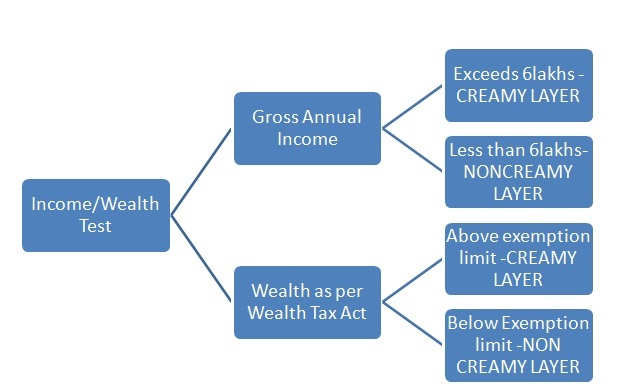
In simple terms, the EC income ceiling refers to the maximum annual family income allowed to qualify under economically weaker or non-creamy layer categories. Different government schemes and reservation systems use income ceilings to identify families that genuinely need financial support.

At present, the most widely discussed income ceiling in India is ₹8 lakh annual family income. This figure is commonly linked with Economically Weaker Sections (EWS), Economically Backward Classes (EBC), and OBC Non-Creamy Layer eligibility criteria. However, many applicants misunderstand what counts as income, whose income is included, and which assets can affect eligibility.
This guide explains the EC income ceiling in detail, including eligibility rules, calculation methods, important conditions, common myths, and practical advice for applicants preparing for competitive exams, admissions, scholarships, and government recruitment.
What Does EC Income Ceiling Mean?
The EC income ceiling is the maximum yearly family income permitted for a person to qualify under specific reservation or economically weaker categories.
The main purpose behind the income ceiling is to ensure that government benefits reach financially weaker households instead of economically strong families.
In most central government reservation frameworks, the income ceiling is currently fixed at:
| Category | Annual Income Ceiling |
|---|---|
| EWS | ₹8 lakh |
| OBC Non-Creamy Layer | ₹8 lakh |
| Many State EBC Schemes | Varies by state |
The ceiling generally includes income from:
- Salary
- Business
- Agriculture
- Professional earnings
- Rental income
- Interest income
- Other taxable and non-taxable sources
Many applicants assume that only salary income matters. That assumption often causes problems during verification.
Government authorities usually evaluate the total family income before approving EC-related certificates.
Why the EC Income Ceiling Matters
The income ceiling directly affects access to:
- Government job reservations
- College admissions
- Scholarship programs
- Fee concessions
- Competitive examination benefits
- Reservation quotas
- Financial aid programs
For many families, qualifying under the EC income ceiling can significantly improve educational and career opportunities.
A candidate preparing for engineering entrance exams, civil services, medical admissions, or university recruitment may receive reservation benefits only if the family income remains below the prescribed threshold.
This is why authorities carefully verify income certificates, property details, and supporting documents.
A rejected application can delay admissions, recruitment, or counseling procedures.
Current EC Income Ceiling in India
The most commonly accepted ceiling today is ₹8 lakh annual family income.
This benchmark is used widely for:
- Economically Weaker Sections (EWS)
- OBC Non-Creamy Layer
- Certain state-level economically backward categorie
However, there is an important difference between these categories.
EWS Income Ceiling
The EWS category mainly applies to individuals belonging to the general category who are not covered under SC, ST, or OBC reservations.
To qualify:
- Family income must be below ₹8 lakh annually
- Property ownership conditions must also be satisfied
OBC Non-Creamy Layer Ceiling
For OBC Non-Creamy Layer eligibility:
- Annual family income must generally remain below ₹8 lakh
- Some government service categories have separate treatment rules
- Certain salary components may not always be counted in the same way
This creates confusion among applicants.
What Counts as Family Income?
One of the biggest reasons for certificate rejection is incorrect income calculation.
Authorities usually include income from all major earning sources.
Commonly Included Income Sources
| Income Source | Usually Counted |
|---|---|
| Salary | Yes |
| Business Income | Yes |
| Agriculture Income | Yes |
| Rental Income | Yes |
| Pension | Yes |
| Interest from Savings or FD | Yes |
| Professional Earnings | Yes |
Many applicants incorrectly hide side income, rental earnings, or agricultural income. During verification, mismatched records can create legal complications.

Whose Income Is Included?
Generally, family income includes earnings of:
- Parents
- Applicant
- Spouse
- Minor siblings in some cases
The exact definition may vary depending on state regulations and issuing authorities.
Property Rules Under EC Eligibility
Income alone does not determine EC eligibility.
Property ownership also matters, especially for EWS certificates.
A family may still become ineligible even if annual income remains below ₹8 lakh.
Common Property Restrictions
Applicants may become disqualified if the family owns:
- Large agricultural landholdings
- Residential plots beyond prescribed limits
- Large residential flats or houses
- High-value urban property
Typical property restrictions include:
| Asset Type | Common Limit |
|---|---|
| Agricultural Land | Less than 5 acres |
| Residential Flat | Below 1000 sq. ft. |
| Municipal Plot | Below 100 sq. yards |
| Non-Notified Area Plot | Below 200 sq. yards |
These limits are important because many applicants focus only on income and ignore property rules.
How EC Income Ceiling Is Verified
Authorities usually verify eligibility through multiple methods.
Applicants may need to submit:
- Income certificate
- Salary slips
- Income tax returns
- Agricultural income proof
- Bank statements
- Property records
- Aadhaar-linked verification documents
- Residential proof
Some states now use digital verification systems connected with tax and land databases.
Any mismatch can trigger rejection or further investigation.
Common Mistakes Applicants Make
A large number of EC certificate applications are rejected because of avoidable mistakes.
1. Hiding Total Family Income
Applicants often mention only salary income while ignoring:
- Rental income
- Agricultural earnings
- Side businesses
- Fixed deposit interest
Verification systems can detect inconsistencies.
2. Confusion About Gross vs Net Income
Authorities usually consider gross annual family income rather than take-home salary.
3. Incorrect Property Declaration
Undisclosed plots, inherited land, or jointly owned property may affect eligibility.
4. Expired Income Certificates
Many examinations require recently issued certificates.
Old certificates may become invalid during document verification.
5. Assuming State Rules Are Identical
Some state governments use different rules for economically backward categories.
Applicants must verify local requirements carefully.
EC Income Ceiling for Students
Students are among the largest groups affected by EC eligibility rules.
Reservation benefits can influence:
- Engineering admissions
- Medical college seats
- Civil services eligibility
- University scholarships
- Entrance examination cutoffs
For competitive exams, even a small eligibility issue can affect the entire admission process.
Benefits Students May Receive
- Reserved seats
- Lower cutoff marks
- Tuition fee concessions
- Scholarship eligibility
- Hostel support
- Financial assistance
Because of increasing competition in exams like JEE, NEET, UPSC, SSC, and state public service examinations, EC certificates have become highly important.
EC Income Ceiling in Government Jobs
Government recruitment systems frequently use income-based reservation categories.
Applicants applying for:
- Central government jobs
- State government jobs
- PSU recruitment
- Educational institutions
must submit valid category certificates during verification.
Authorities usually cross-check:
- Annual family income
- Service category of parents
- Property ownership
- Income tax records
Providing incorrect details can result in cancellation of candidature.
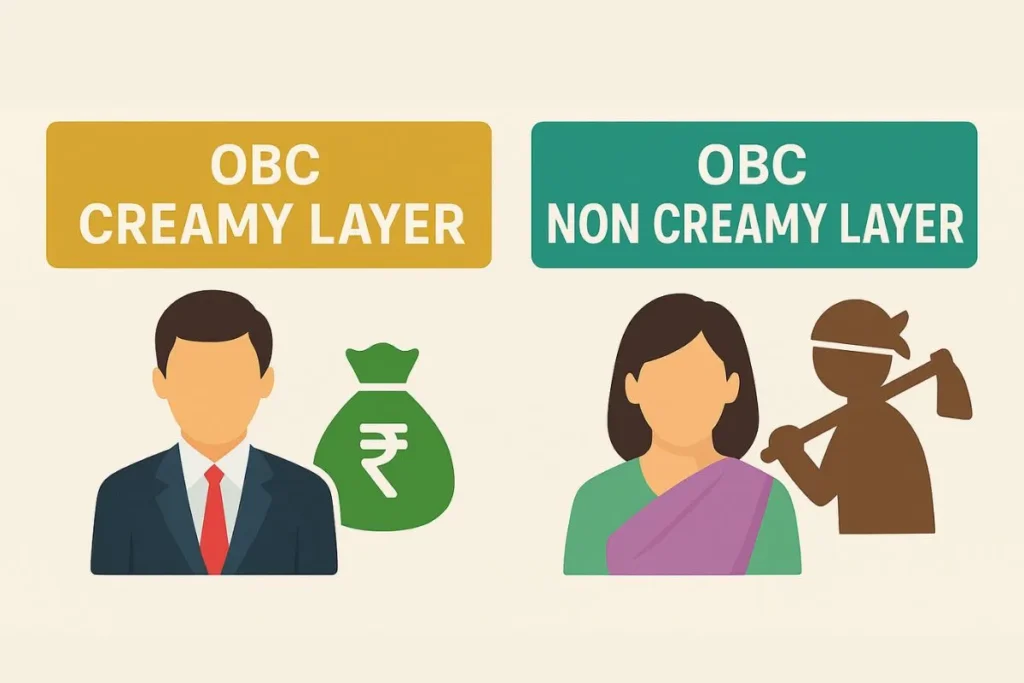
Difference Between EWS and OBC Non-Creamy Layer
Many applicants confuse these categories because both use the ₹8 lakh figure.
However, the categories are completely different.
| Feature | EWS | OBC Non-Creamy Layer |
|---|---|---|
| Applicable Category | General Category | OBC Category |
| Reservation Type | Economic | Social + Economic |
| Income Ceiling | ₹8 lakh | ₹8 lakh |
| Property Rules | Important | Less prominent |
| Caste Eligibility | Excludes SC/ST/OBC | Only OBC |
This distinction matters during certificate application.
Using the wrong category can invalidate the application.
How Income Ceiling Impacts Reservation Policy
The EC income ceiling has become a major policy discussion point in India.
Supporters argue that income ceilings help direct reservation benefits toward genuinely weaker households.
Critics argue that inflation and rising living costs require periodic revisions of the ceiling amount.
In metropolitan cities, many families earning close to ₹8 lakh annually still face:
- High education costs
- Expensive housing
- Medical expenses
- Competitive coaching fees
At the same time, governments must maintain a balance between inclusion and misuse prevention.
This debate continues in courts, public policy discussions, and reservation-related committees.
Important Documents Required for EC Certificate
Although requirements differ across states, most applicants usually need:
Personal Documents
- Aadhaar card
- PAN card
- Passport-size photographs
- Domicile certificate
Income Documents
- Salary slips
- Income tax returns
- Employer certificate
- Business income proof
- Agricultural income details
Property Documents
- Land ownership records
- House documents
- Municipal property certificates
Keeping these records updated helps avoid delays.
How to Improve Approval Chances
Applicants often rush the process and make avoidable mistakes.
These practical steps can help:
Verify All Income Sources
Calculate annual family income honestly before applying.
Check State-Specific Rules
Rules can differ between central and state authorities.
Keep Documents Consistent
Names, addresses, and family details should match across documents.
Apply Early
Do not wait until counseling or examination deadlines.
Use Updated Certificates
Many institutions accept only recently issued certificates.
Real-World Example of EC Eligibility
Consider a family with:
- Father’s salary: ₹5.5 lakh
- Mother’s rental income: ₹1.2 lakh
- Interest income: ₹70,000
Total annual family income becomes:
₹7.4 lakh
If property conditions also meet eligibility standards, the applicant may qualify under the EC income ceiling.
Now consider another family:
- Salary income: ₹6 lakh
- Agricultural income: ₹2.5 lakh
Total income becomes:
₹8.5 lakh
In this case, the applicant may become ineligible despite having a moderate salary.
This is why accurate calculation matters.
Future Changes in EC Income Ceiling
Experts frequently discuss whether the ₹8 lakh ceiling should increase in the future.
Several factors influence this debate:
- Inflation
- Urban living costs
- Education expenses
- Economic inequality
- Reservation demand
Some policy analysts believe future revisions may happen gradually instead of suddenly.
However, applicants should always rely on officially notified criteria at the time of application.
Assumptions based on social media discussions often create confusion.
Frequently Asked Questions
What is the current EC income ceiling?
The commonly used EC income ceiling is ₹8 lakh annual family income for categories like EWS and OBC Non-Creamy Layer.
Does agricultural income count under EC eligibility?
Yes, agricultural income is generally included while calculating total annual family income.
Can salary alone determine EC eligibility?
No. Authorities usually consider all family income sources, including business, rental, agricultural, and interest income.
Is property ownership important for EC certificates?
Yes. Property ownership plays an important role, especially in EWS eligibility criteria.
Does family income include parents’ earnings?
Yes. Parents’ income is normally included in annual family income calculations.
Can an applicant lose reservation benefits after verification?
Yes. Incorrect income details, fake certificates, or hidden assets can lead to rejection or cancellation.
Is the EC income ceiling same across all states?
No. Some states use different rules and thresholds for economically backward categories.
How often should income certificates be renewed?
Many institutions require recently issued certificates, often within the same financial year or admission cycle.